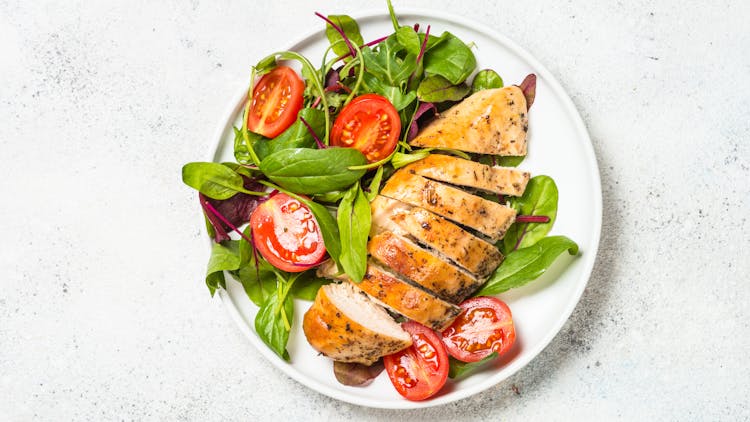
As I entered into this year’s Lenten season, I decided to tackle an issue I have struggled with most of my life — my relationship with food. Some people have no issues with the what, where, when, and how to eat, consuming every waking moment of their lives. For some people, food is merely a molecule of energy; for others, it’s a mode of creativity, and others still, a way to share love. I was not one of those people. For most of my life, food has been a control mechanism. A path toward perfection.
Lent is an ideal time to reassess our priorities and, for me, to see where I get distracted from nurturing my relationship with Christ. Growth requires struggle, and I knew if I were to grow closer to Christ, food would be the path for me to take.
Usually, as an Orthodox Christian, I am supposed to fast from meat, dairy, fish, eggs, oil, and wine for over forty days. However, for my health, I knew I had to do the exact opposite. I have no problem not eating a lot of meat and animal products. I have nothing against them, and I do eat fish, eggs, and more recently, some good grass-fed beef from Azure. But I decided to embark on a nutrition regimen that would require me to shift toward a very low-carb (maximum 30 grams a day), protein-intensive diet (up to 135 grams) with moderate fat (63 grams) intake. That would be a huge challenge for me. I love my sweet potatoes. I love having crackers with my cheese. I love a good craft cocktail to celebrate happy times with friends. And I especially love dark chocolate.
While I normally give up chocolate for Lent anyway, everything else would be new and require me to reevaluate how I eat, and more importantly, why I eat.
I hit some snafus along the way. Okay, many. The biggest one being the protein requirements. As well armed as I was with stacks of chicken breasts, jars of tuna in olive oil (my go to!), packages of sou-vide beef, tons of eggs from my local farm, and much more dairy products than I have ingested over the course of my entire life, the 135 grams of protein was not happening.
Plus, recent blood work showed that my mercury levels were higher than normal! Yikes. This was likely due to the obscene amount of tuna I had been consuming.
So, I adjusted. I decided to go full-on keto. I would have an easier time going hog wild on fats than forcing a bunch of dry chicken breast down my throat. It is really difficult to produce anything other than a dry piece of chicken, but I’m all in if I can add a cup full of mayo! (Avocado oil based, of course.)

This lifestyle was very challenging for me for the first two to three weeks. The cravings for foods that would easily convert to glucose were intense. The desire to reach for something to fill space or because I was bored was obvious. Very obvious. I noticed how much I leaned on food, not necessarily for nourishment, but for security and as a tool for control.
Now, after almost a full month has passed, the benefits have far outweighed my expectations. I had heard about the ability to go for long periods of time without eating and the brain clarity. I had heard about people enjoying cheese and meat and butter to their heart’s content. But I didn’t think that would be possible for me.
But it is possible. And I am loving it.
First, I am reclaiming a lot of the time I was losing to mindless snacking, sitting by the kitchen to work, and random trips to the fridge. There really is nothing to “snack” on except cheese, which, let’s face it, isn’t terrible. Although I still have a tendency to not sit down and eat a full meal until late afternoon or dinner, often I don’t need to eat one until then. Eating keto has altered my hunger signals and reduced what is often known as “food noise.”
I have also been more focused with less anxiety. Studies show a direct connection between how your body produces energy (metabolic health) and mental health. I have interviewed experts who have done significant research on reducing depression, anxiety, and even bi-polar disorder and schizophrenia, with a ketogenic diet. While I have never been clinically diagnosed with any of these, I can tell you that I am more mentally stable and steady than I have been my whole life. I can sit for longer periods of time to write.
One might assume that doing all the prep for a ketogenic diet would be super time-consuming. Yes and no. Even though I am spending a tad more time preparing food (particularly since I can no longer crack a jar of tuna whenever I want), I am not thinking about it all the time. I make sure to stock my fridge with everything I might need for the week, so I always have something to eat when I am hungry.
I am not concerned with calories, and while some are stricter with macro counts, I ballpark mine. Since most of my foods are under 5 grams of carbs per serving, I don’t stress about it! I am very liberal with my oils (mostly olive and coconut), butter, beef tallow, and other healthy sources of fat, such as avocados, eggs, fatty fish, and olives. The rest of my carbs come from leafy greens, lots of broccoli and cauliflower (roasted or steamed, with, you guessed it, olive oil), and a few weekly servings of a fiber supplement to help things move along, so to speak.
I am also shocked at how much dairy I can eat! I mean, half and half in my morning latte? Sign me up! For years, I assumed I was lactose intolerant. I’m not. I just needed to heal my gut. This diet seems to reduce the belly bloat I have experienced most of my life.
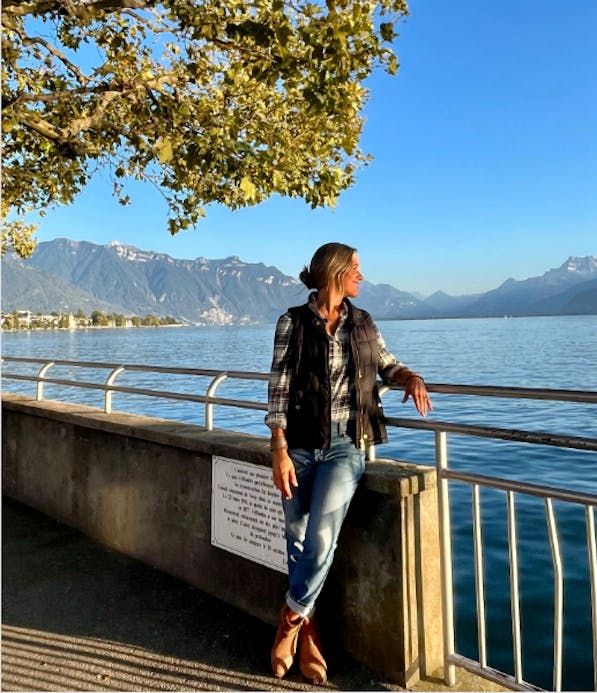
While all of these benefits have been amazing, the most enlightening part of the process has been the realization that for years, my unwillingness to try something new was based on my own stubbornness and resistance to change. I believed that living with discomfort was just going to be the way it was, and I’d have to struggle the rest of my life. I should know better. Christ changes everything, and the more I leaned into Him during this process, the easier it was to manage it.
I also recognized that while I am a relatively productive person, I was resistant to strong discipline, particularly around food, after experiencing eating disorders most of my life. I had to reframe what seemed to be a very restrictive eating pattern. I wasn’t necessarily depriving myself of real nourishment, as I had in the past. In fact, I was increasing my nourishment, and in the process, decreasing my constant need for something to fill both the physical and psychological void.
Restriction can indeed lead to freedom. Enter by the narrow gate; for wide is the gate and broad is the way that leads to destruction, and there are many who go in by it. Because narrow is the gate and difficult is the way which leads to life, and there are few who find it. (Matthew 7:13-14)
Don’t get me wrong. I am not claiming the keto diet is the path to Christ. I am talking about the psychological and emotional roadblocks we often place in front of ourselves to avoid necessary change, the mental gymnastics we’ll perform to avoid discomfort, and the excuses we make to divert responsibility.
My latest dietary endeavors have helped me understand this in a profound way, and in the process healed many things I thought could not be healed. I am glad I had the support of my church community and millions of other Orthodox Christians, who, while possibly doing it differently than I, were also denying themselves and sacrificing things they enjoyed to grow stronger in their beliefs.
While an extreme change like mine may not be necessary for everyone, it is where I needed to go to ultimately find balance. For many, a shift in focus to a whole food diet filled with nutrient-dense choices may be enough of a challenge to produce similar fruitful results.
If you are thinking of embarking on a similar change, whether for your health or as a spiritual discipline (although can we really separate those aims?), I’d encourage you to do so. Is it easy? No. Is it comfortable? Heck no. But then again, nothing worth doing is.