I live in a town nestled between mountains. As the season changes, the mountains transition from mossy green to burnt orange, and the patter of rain grows heavy on the windowsills. Sweaters are pulled from closets, and tissues return to grocery lists. The mountains signify autumn’s return, and most importantly, pumpkin goodness! Pumpkins are growing like wildfire in gardens and farms across the country. I’m the girl everyone makes fun of for liking pumpkin spice lattes — if it were up to me, I’d make them available all year round! But beyond pumpkins and pumpkin spice lattes lies a whole world of winter squash waiting to be explored.
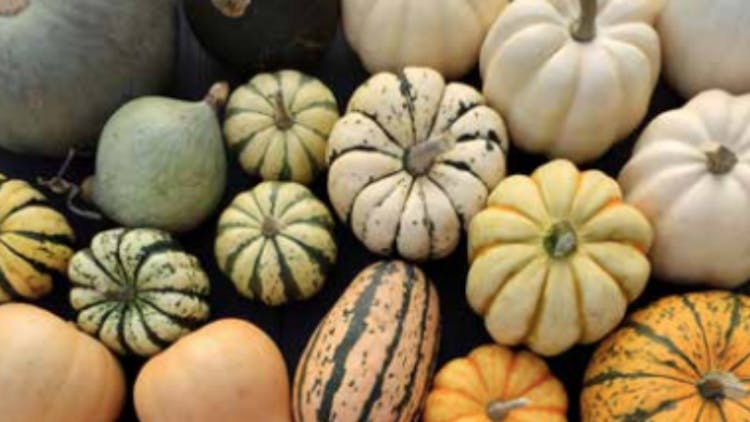
Winter squashes come in all sorts of wonky shapes and sizes, not just the classic bright orange pumpkins you see at the pumpkin patch. In fact, there are hundreds of varieties! Lucky for you, I’ve narrowed it down to the five most common winter squashes you’ll find at Azure this fall, as well as at your local grocery store or farmer’s market!
Delicata squash is characterized by its long green lines and yellow base; its skin is edible, and it is often compared to the sweet potato for its sweet, soft creaminess. You can pick up the entire squash from Azure or grow your very own delicata squash from Azure Husbandry’s organic Honey Boat delicata squash seeds (GP498).
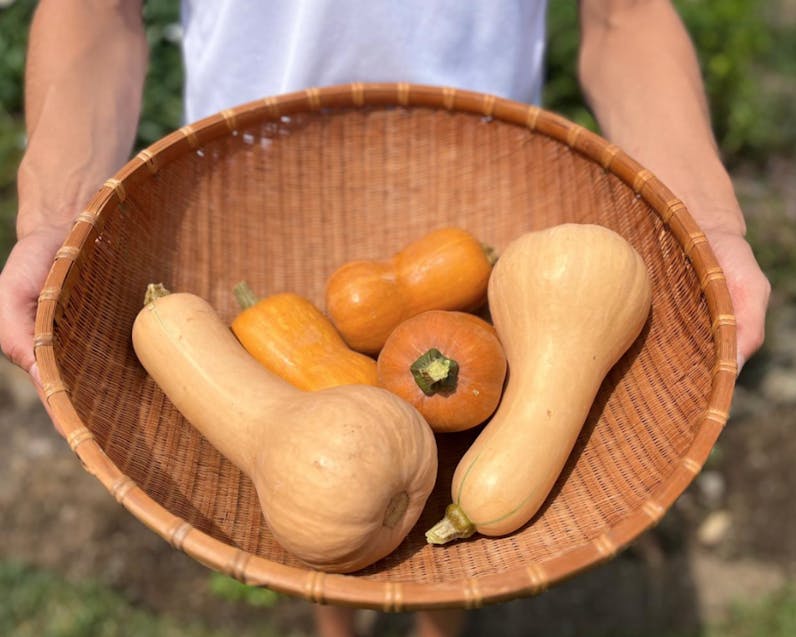
Butternut squash (FG1115) is probably the first thing you think of when you hear “winter squash.” Its name perfectly describes its buttery, nutty deliciousness. The skin is also edible, and this squash is best served baked. (Read to the end of this article for some tried-and-true squash recipes, including butternut squash cake rolls!)
Acorn squash has an acorn-like shape. It's dark green on the outside and, like its namesake, has a nutty flavor on the inside. Azure Husbandry carries the Sweet REBA variety of acorn squash seeds (GP576).
Spaghetti squash, as its name suggests, has a spaghetti-like consistency perfect for serving with butter, salt, and pepper or marinara sauce for a delicious, gluten-free alternative to pasta.
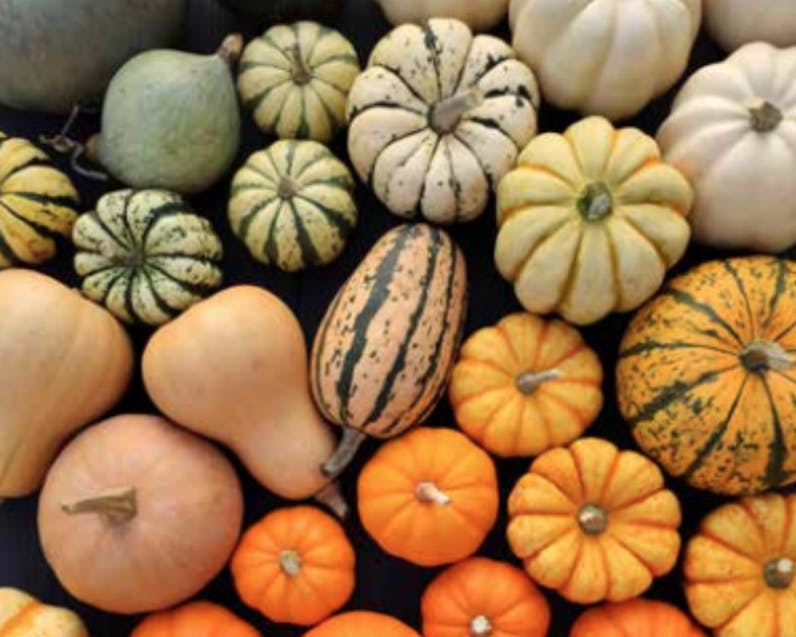
Pumpkins are, of course, the most popular squash due to their bright orange color and seasonal symbolism. They’re so frequently used for decoration that people often forget they’re actually squashes and can be served just like all other winter squashes after the fall festivities come to a close. Azure Market’s raw pumpkin seeds (SE073) are tasty additions to trail mixes and stews, and their pumpkin purée (GY0346) is perfect for pies, pancakes, and other baked goods!
All of these squashes contain numerous nutritional benefits, which is why winter squashes are one of my favorite seasonal foods. Most squashes contain vitamins B6, A, C, and beta-carotene, which serve as antioxidants and improve skin health, among other advantages. Squashes also contain fiber, iron, magnesium, and potassium, essential nutrients for a healthy diet. You can easily incorporate squash into your weekly meals for a wholesome breakfast, lunch, or dinner. I often roast a squash or two on a Sunday night, store it in the fridge, and add it to my lunch throughout the week for a healthy, hearty midday meal.
Whether you like your latte with pumpkin spice or prefer squash in a simple dish, winter squash can be enjoyed any way you like! As we journey into autumn, take the time to make a hearty, squash-filled meal that nourishes your body with nutrients and uplifts your spirit by savoring this seasonal food.
Looking for creative ways to cook with winter squash?
Sweet Treats:
- Grain & Sugar Free Pumpkin Muffins
- Best Butternut Squash Cake Roll Recipe
- RECIPE: Pumpkin Cake with Cream Cheese Frosting
- Pumpkin Pancakes
- Quick & Easy Pumpkin Sweet Bread
- Sweet & Moist Pumpkin-Squash Muffins
Wholesome Meals: