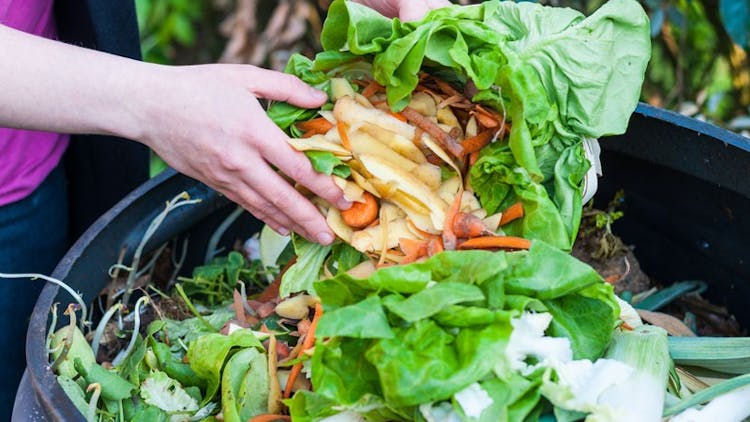
With or without our approval or help, decomposition is nature's way of recycling organic waste and replenishing the soil. Billions of microorganisms, such as bacteria and fungi (in consort with worms), digest the sugars and proteins in organic material and even clean up industrial waste and chemicals. Without these organisms there would be no decomposition and the planet would be buried in waste.
These microorganisms need four things to do their job: a source of energy (carbon); a source of protein (nitrogen); oxygen; and moisture. This process produces carbon dioxide — the essential ingredient that plants need to live.
Compost is the beautiful end product of all this microscopic consumption — that moist, dark, rich, fresh-smelling soil that gardeners refer to as “black gold.” It's nearly impossible to resist running your fingers through it. In fact, regular contact with rich soil has been shown to have a calming anti-depressant effect. (We’ll skip the gloves, thank you.)
Why Should You Compost?
Other than the anti-depressant benefit listed above, there are many reasons to compost. Composting can cut your garbage collection costs, eliminate the need for chemical fertilizers and herbicides, and reduce water use requirements — all of which saves money. Most importantly, compost added to poor soil restores health to the soil and added to good soil maintains robust health. The latter is perhaps the most compelling.
Compost is in and of itself restorative and can clean up contaminated soil. The most prevalent contaminant is glyphosate, more commonly known as Roundup. It's used both commercially and privately and is essentially a soil antibiotic. It takes an average of seven years for soil contaminated with glyphosate to rebound. However, compost applications can cut that time by as much as half after glyphosate use is curtailed.
Why Healthy Soil is Important
Admittedly, the convenience of using chemical fertilizers and weed killers is tempting. No fuss, no muss, right? Wrong. Unfortunately, the repeated use of these toxic applications has both short- and long-term consequences that directly affect not just environmental health, but human health. Those effects in humans can manifest themselves in chronic gut diseases such as Gerd, IBS, Crohn's, leaky gut, or other degenerative disorders.
“A nation that destroys its soil, destroys itself,” said our 32nd president. Regardless of your opinion of Franklin D. Roosevelt, he nailed this one. Our very lives derive from and depend on healthy soil. Broken down into simple DNA, a healthy human body is only 10% human. The remaining components are water at 70% and beneficial microorganisms at a whopping 20% -- twice as much as actual human DNA. We literally cannot live without these essential nutrients. The myriad colonies of symbiotic flora, which mostly reside in our gut, are vital to our survival and health and the vast majority of them originate in healthy, organic soil.
Agricultural chemicals not only kill these microbes in the soil, they kill them in our bodies, both indirectly through low-nutrient toxified food (poor soil = poor plants) and through direct exposure. As our microbiome dies off, so do we.
Healthy soil doesn't need chemical applications anymore than a healthy person needs a medicinal remedy. In fact, as is the case when more and more medications are given to people, more and more chemical applications added to soil in an attempt to “enrich” it actually cause further decline in health. You may find that naturally and organically restoring the health of your soil will go hand in glove with restoring the health of your gut. Soil restoration is not only in our own best interests, but in the best interests of generations to come.
To that end, composting is something nearly everyone can do on some scale, so let's dig in.
How to Use Compost
Compost replaces commercial fertilizers for all applications. It can also be used straight as potting soil and as soil amendment. For those who want to make an immediate switch to organic while waiting for their compost to “cook,” NutriRich organic composted chicken manure (GP271, GP272) is excellent for veggies, flowers, and pastures alike. Buffaloam compost and compost tea work well for smaller applications such as in potted plants (GP512, GP516).
But truthfully, there is no one way to compost. The best method for you depends on several factors:
Regardless of what system you use, it must provide the four things necessary for beneficial microbial habitat: Right Input (carbon & nitrogen in good ratio); Air Circulation (oxygen); Consistent Moisture; and Adequate Volume.
Soil Incorporation and Sheet Composting
Barring municipal restrictions, “natural” methods that simply let nature take its course are cheap and increase the worm population in your soil. That's always a good thing.
A method known as “soil incorporation” is as basic as it gets. Just dig a trench 10-12 inches deep, throw in kitchen garbage and yard debris, chop and mix with soil, and bury the mix with the remaining dirt. Within a few months, the decomposed material will have become soil. Plant over it and enjoy the results. This is an excellent way to prepare a garden or hedge row.
Sheet composting or mulching makes use of large amounts of leaves and grass. (No food waste with this one, please.) Late autumn or at least two months before planting, lay down layers directly on the soil or till it in. Tilling is less desirable for soil that is already well established, as this disrupts the colonies of microorganisms and requires more time for them to recuperate. However, if you're using this method to rejuvenate poor soil, tilling can help speed up the process.
I particularly like this method in vegetable plots. Starting with a mulch layer that is 5-6 inches deep, simply part the mulch to put the starts into the soil, water them in and then recover with mulch around the plant. Not only does the thick layer of mulch hold in the moisture (I rarely have to water during the summer, if at all) and make any stray weeds that may come up super easy to pull, but it later makes kneeling to harvest a lot more comfortable, too.
Bin Composting
The first step in bin composting is a good planning checklist:
Compost bins can be ready-made or homemade, single or multiple bin systems, tumbler or add-to collection style. In a manufactured bin, look for portability, lid and air vents, scavenger determent, heat retention, enough volume for your needs, and an efficient way to turn and then shovel out the finished compost. Homemade bins can be made of a variety of materials and plans are ubiquitous online.
Multiple bins work well for composting large quantities in a rotating system. Compost materials can be piled in one bin, then the next as materials are available. By the time a third bin is filled, the first one should have finished compost ready to use.
Keep a collection bucket with a lid and filter close at hand in a service porch or just outside a back door (HA131, HA132) as a temporary holder for kitchen scraps, dryer lint and other household compostables. It's no fun running out to the compost bin or pile every time you have a contribution to make, especially in inclement weather.
Worm Composting
Also known as vermicomposting, worm composting works well on a small scale and keeps red worms well employed. Kits are an excellent way for those with little space and not much waste to reduce their trash collection volume and make soil for container gardening or to pamper houseplants.
When done properly, worm bins have no unpleasant odor and can be kept indoors in a service porch, large pantry, laundry room or even the lunch room at work. Vermicomposting doesn't just produce a wonderful soil, but a plant-enriching “tea” that is especially good for both soil and foliar applications. The worm bin should not be in a hot sunny place or anywhere that might reach freezing temperatures, as these extremes will kill the worms.
But worms don’t love every kitchen scrap you think to toss into the bin. In fact, worms are somewhat picky. I’ve put together two quick lists to help guide your worm composting:
Worms love:
- Vegetable scraps
- Breads & grains
- Fruits rinds & peels (melon rinds should be chopped up)
- Tea bags
- Coffee grounds & filters
- Dryer lint
- Shredded paper, including junk mail, but minus any glossed or plasticized papers or cards (Remove cellophane from window envelopes.)
Worms hate:
- Meat and fish
- Cheese and butter
- Greasy oily foods
- Animal wastes
- Egg shells (unless very finely ground)
Add-As-You-Go Composting
This is the most commonly used composting method, mostly because it requires so little effort. Little or no stockpiling is needed and disposal of kitchen waste, yard debris and grass clippings is immediate and quick. The downsides are slow decomposition (3-8 months for finished compost), tendency for odor problems and less heat generated. An uncovered pile could also attract pests. If the add-to pile is in a containment structure of some kind, a lid will help discourage scavengers. Turning or mixing the collection every few days will cut down on odor and speed up composting time.
When Will the Compost be Ready to Use?
The volume of material being composted combined with the method and ambient temperature will determine the time it takes to have finished compost ready to use. For smaller quantities and more rapid methods in warm climes, usable compost could be ready in 1-3 months. For large volumes using slower methods, look for usable compost in 3-8 months; in cooler climes, it could take as long as a year, especially for very large volumes.
What are Activators in Compost?
Activators are organic materials high in nitrogen. Some are enzyme-acting and come powdered to mix in water. When sprinkled on a slow-acting compost pile, they are activated just like yeast. Others can be as simple as fresh or dry chicken, cow, goat, or rabbit manure.
Heat in a compost pile needs to reach 160 degrees Fahrenheit to properly process. So, if the weather is too cool or the compost pile has a high ratio of carbon-rich material, such as dried leaves, straw, sawdust, etc., an activator can be used to heat and speed things up.
Apply a fresh manure layer 2-3 inches deep on top of green/brown layers. Dust dry manure and powdered meals and coffee grounds in small amounts on top of food scraps with a large scoop or implement designed for that use. For enzyme-activators, follow the directions on the package. A little goes a long way, so don't use too much. You can always add more if need be.
These activators work equally well:
- alfalfa meal
- bloodmeal
- bonemeal
- chicken manure (dry)
- coffee grounds
- rabbit manure (fresh or dry)
Composting, Soil Health and Your Health
Compost is an investment not just in your home environment but in your gut environment. Healthy soil is essential for both. Good health and poor health begin in the soil and manifest in the gut, so don't hate your guts; love your guts. Help them out by using good compost for cleaner ground and healthier fresh garden vegetables each year. The payoff is a healthier you, and ultimately a healthier planet.
LEARN MORE ABOUT HOW TO COMPOST
Composting Dos and Don'ts: What Types of Waste Can Be Composted