Look at the birds of the air, for they neither sow nor reap nor gather into barns; yet your heavenly Father feeds them. Are you not of more value than they?
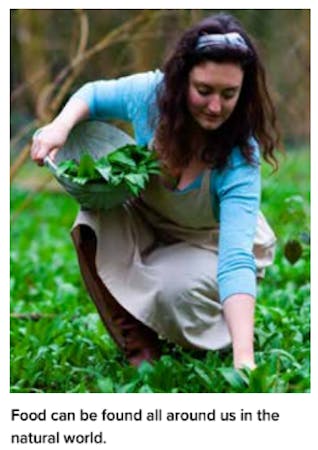
At Azure, we often talk about the bountiful harvests we enjoy from our cultivated lands: the orchard trees become heavy with fruit, and the field crops ripen for picking. But all around us, the wild native plants also have their heyday, and their contributions to our health are often underestimated or even unrecognized.
It is August, and the wild world is magical – from flashing glow-green fireflies to sprawling branches overhead decked out with lush leaves. I find myself wishing I had set a timelapse camera to capture the slow-but-steady march of the vegetation as it stretches and creeps, taking over the landscapes of our yards and gardens in its seasonal triumph. What began in early spring with the first sprigs of green is now the plant kingdom’s full-on effort of earth domination, and I couldn’t love it more in its wild conquest.
It demonstrates that our manicured and ‘civilized’ landscape is temporary, that the plants are poised to reclaim their rightful place on the planet at any given moment. But it also reminds us that, ultimately, we are part of the natural world. Everything we truly need can be found surrounding us, sprouting up from sidewalk cracks, spilling over from wooded lots, and attempting to take over our garden plots.
Many years ago, before we had an industrialized food system, our ancestors relied on foraging for wild edibles for sustenance. Explorers who settled in our country could survive thanks to natives who taught them how to recognize edible and medicinal plants and cultivate crops. And even not so long ago, during the Great Depression, many of our grandparents and great-grandparents subsisted on foods gathered from the roadsides, meadows, forests, and fields in their local areas.
Many of us lost this knowledge with the ease and convenience of modern grocery markets. In recent decades, backyard gardens became less common, too. But as food prices climb upwards and interest in alternative health increases, self-reliance is making a comeback. We are seeing an uptick in gardening. And in some circles, there is renewed interest in identifying, gathering, harvesting, and preparing foods from the bounty around us.
In an age of plenty, why would we be interested in foraging? The reasons are many. Some have discovered that nature’s medicinals are more effective, safer, or have fewer side effects than pharmaceuticals. Many of us hope to rekindle the wisdom of our ancestors. Others value wild edibles because they are nutritious, free of pesticides, and not genetically modified. And for some folks, there is great satisfaction in the journey – a stroll past woodlots, a hike in the hills, or a walk in your backyard can turn up edible seeds, stems, flowers, foliage, fruits, and roots.
No matter your motivation, as you begin to pay attention to the vegetation surrounding you, you will quickly discover that the “weeds” you walk by each day may have a purpose beyond getting in your way. When you begin to do some research, you may find that health and abundance are a part of our natural world; we just have to know how to access them. They are offered to us in the form of a bounty of edible wild plants!
At Azure, we encourage the use of wild edibles and medicinals as a valuable part of the journey to healthy and abundant living. It is rewarding to discover how to identify and use what is growing in your backyard! For us, the more we learn, the more we marvel at the incredible wisdom and loving provision of our Creator.
Below are some wild edible and medicinal plants commonly found across most of our country. We have chosen to highlight several plants that are often seen as “weeds” – those that are readily available in most places. We have excluded rare or overharvested native species.
Note: Please exercise caution when collecting because many edible plants have look-alikes that are toxic. You can learn a lot through plant identification books, but when in doubt, consult an experienced herbalist or botanist before consuming any wild vegetation. That said, if you learn to accurately identify plants, you will have a broader source of foods to incorporate into your diet and a backup plan for emergencies.
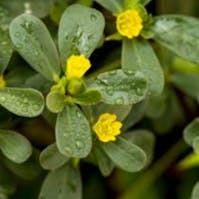
Purslane(Portulaca oleracea) - Purslane is a leafy green succulent plant that grows everywhere, even in harsh conditions. It thrives in sidewalk cracks, abandoned lots, roadsides, yards, and old garden plots. Purslane happens to be one of the most nutrient-dense plants on earth! It has the highest concentration of omega-3 fatty acids of any plant and contains vitamins A, C, and E (for eyes, immunity, and cellular health). It is rich in calcium, magnesium, folate, and iron. This leafy green succulent has a tart, salty flavor and makes a great addition to salads, sandwiches, sautés, and even smoothies. Its leaves can be eaten raw, cooked, or pickled. It can be made into a tea to treat colds and bronchitis or a purslane poultice for cuts and burns.
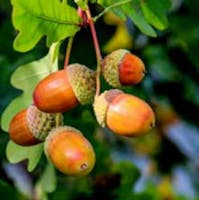
Acorns(Quercus spp) - The seeds of an oak tree are recognizable to most of us and are a calorie-dense food source making them an excellent edible. Because they have tannins in them, you’ll want to mash and then rinse the acorn meat to remove the bitter compounds before using it for flour or meal. Other nuts are also quite a find for a forager. Hickory, walnut, chestnut, beech, and even pine nuts can be collected and are high in carbs, protein, and fat, providing you with energy and calories.
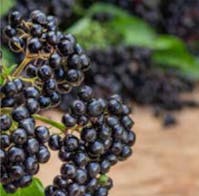
Elderberry(Sambucus spp) - These blue to purple-black berries grow wild in many areas of the US. They are one of the most potent natural sources of vitamin A, thiamine, calcium, and niacin. There are many species of elderberry, and they vary in suitability for eating depending on the amount of hydrocyanic acid (a bitter-tasting toxin) they contain—the more bitter the taste, the more poison. The toxins are more heavily concentrated in the leaves and bark, which you should not eat. Cook or tincture the ripened berries before eating. Elderberries make delicious preserves for pie filling, jams, jellies, and wines. Elderberry juice is commonly used today as a cough syrup, immune enhancer, and for cold symptoms. Elderberry poultices and ointments make an effective treatment for skin conditions.
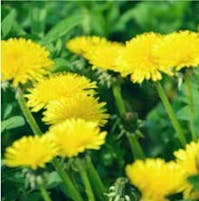
Dandelion(Taraxacum officinale) - Often considered an invasive weed growing in yards or roadsides, wild dandelions are valuable for restoring soil and their medicinal and edible properties. All dandelion parts are useful. A salve can be made from the flowers, pesto made from the nutritious leaves (high in A and K), and dandelion coffee is made from the roots. Young leaves are tastier and less bitter and can be added to salads and eaten raw. Mature leaves and roots should be boiled before eating for a better flavor. The bright yellow flower heads can also be eaten raw as a snack, added to a salad for some color, or fried for a side dish. Dandelion is thought to have detoxifying and cleansing effects, reduce inflammation, and protect against several chronic diseases. It is high in the minerals calcium, magnesium, and iron and is a good source of vitamins A, C, K, and folate.
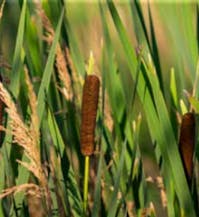
Cattail - (Typha spp) These tall, reed-like plants are one of the most versatile edible wild plants and are found in large clumps throughout the US along the edges of wetlands and freshwater areas. All parts of the plant can be eaten and are an excellent source of calories. In spring, try eating the tender shoots raw or sauteed. The yellow pollen of late spring is an excellent substitute (or addition to) flour. You might also enjoy eating its flower spike, which looks a lot like corn on the cob. If you find yourself in need of fire-starting material, try drying the fluffy seeds that make up the spike.
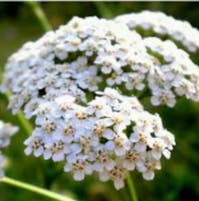
Yarrow(Achillea millefolium) - Yarrow is a perennial weed of the aster family that grows along roadsides, meadows, yards, and disturbed areas all over our continent. Fun fact: its scientific name “Achillea” originated from the classic work The Iliad. In that epic poem, the hero Achilles used yarrow to stop the bleeding of his soldiers’ wounds during the Trojan War. Yarrow has alkaloids that are very effective in quickly stopping bleeding—crush its leaves or flowers and apply them to cuts and wounds. It also has anti-inflammatory and pain-relieving effects and can help with digestion and anxiety. Yarrow tea is frequently used to treat colds and fevers. A word of caution, though: yarrow is often confused with highly toxic poison hemlock, so you must be very careful to make sure your identification is accurate. If you safely identify it, you will be rewarded with a beneficial edible and medicinal plant!
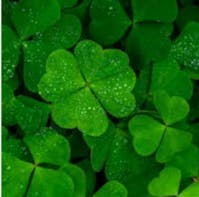
Clover(Trifolium spp) - Both red and white clover are easy to recognize and find across temperate, grassy areas in North America. These members of the legume family are high in protein and have anti-inflammatory effects. The flowers have many vitamins and minerals and can be eaten raw in salads or made into tea. Many women use clover to treat menopausal hot flashes and fertility. Native Americans ate all parts of clover plants, including roots, raw and cooked.
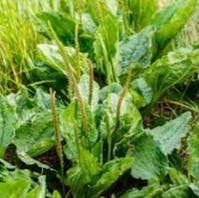
Plantain(Plantago spp) - You will find wild plantain growing in backyards, along roadsides, and in big city sidewalk cracks. It is a tough plant that grows in disturbed areas where others cannot. Also, it grows well in most climates for most of the year, and its seeds can remain viable for up to 40 years! Plantain leaves can be crushed and made into a poultice for wounds, snakebites, poison ivy, nettle stings, and rashes. They quickly relieve itching for mosquito bites! There are three widespread species in the US, all of which are loaded with vitamins A, C, and K and are a source of iron, calcium, and magnesium. Tender young plantain leaves can be eaten raw, and older leaves make a great addition to soups and stews; you can use them as you would kale or spinach, even making plantain chips in the oven. This herb has antibacterial and anti-inflammatory properties and is taken to treat intestinal issues and for general health.
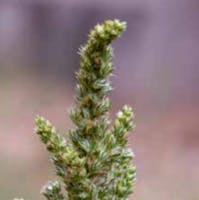
Amaranth(Amaranthus spp) - Also known as pigweed, several varieties of amaranth grow prolifically in America and are readily available to most of us for the taking. The greens are loaded with vitamins A and C, calcium, potassium, and magnesium and can be cooked for use in many dishes. You can also grind amaranth’s highly nutritious seeds into flour for baking. It tastes delicious and has excellent nutritional value. For all these reasons, it is a plant you should learn to identify and start gathering!
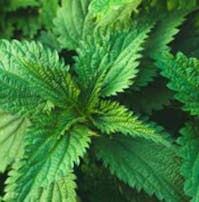
Nettle(Urtica dioica) - This highly nutritious superfood is tricky to harvest due to its stinging leaves— take care to cover any exposed skin, or you will experience the burning sensation from formic acid. However, once simmered or sauteed, the stinging qualities disappear, and you are left with one of the tastiest wild greens around! Use nettle the same way you’d use any other leafy green. For best flavor, collect only the tender tips and young plants under two feet tall. This wild-growing weed has anti-inflammatory, anti-bacterial, and astringent qualities. It is easy to find and full of benefits.
There are hundreds of other valuable plants that you can forage for yourself. Echinacea, lobelia, berries, mullein, comfrey, wood sorrel, chickweed, sumac, and goldenrod are some of my favorites. Fungi (mushrooms) can be another source of foraged food, though you must be extremely careful and skilled at identification since some highly poisonous mushrooms are easily confused for edible species. Mushrooms can kill you very quickly, so we do not recommend amateur collecting.
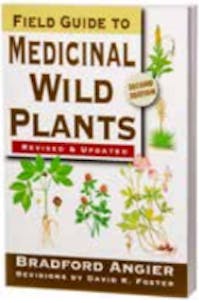
If you do not have local experts to help guide your pursuit, we recommend you begin educating yourself using field guides and books on foraging. One we have found useful is Field Guide to Medicinal Wild Plants(BK086) by Bradford Angier. He also authored a companion book titled Field Guide to Edible Wild Plants. Both have precise (and beautiful) drawings by Arthur Anderson that are extremely helpful in identifying plants.
The following three books are not guides on foraging or plant identification, but rather help you know what to do with your finds once you gather them. You’ll want to learn how to dry, can, freeze, ferment, cook, or preserve what you forage.
Herbally Yours(BK623) by Penny C. Royal is a book of herbal medications, many of which are available for foraging. It contains definitions and basic directions for making decoctions, extracts, infusions, oils, and poultices.
Wild Jams and Jellies(BK420)by Joe Freitus is a useful cookbook for turning some of your foragings into jams, jellies, pickles, preserves, and sauces.
Another fun book we have enjoyed is Storey’s Curious Compendium of Practical and Obscure Skills(BK589). While its content is not exclusive to foraging, it does have a small section on gathering edibles. If you want to get started on a wide range of do-it-yourself skills, consider this one!
Foraging is a skill worth cultivating for yourself and to pass to the next generation. Knowing how to use the vegetation around you is valuable for boosting health and nutrition, reducing food costs, being self-reliant, living more in tune with the natural world, and for unexpected times of crisis. There is great value and enjoyment in learning how to use local plants growing in our backyards and nearby natural areas. You may be surprised to find that what is growing around you is as valuable in health benefits as what you are tending in your garden! We might think of it as an old-time skill, but for all these reasons, foraging has a place in modern living.
As always, we at Azure encourage you to take advantage of the medicinal power of plants and the health advantages of wild foods growing around you. By expanding your knowledge, you can better nurture one of the greatest gifts we have been given—our health and that of our families.