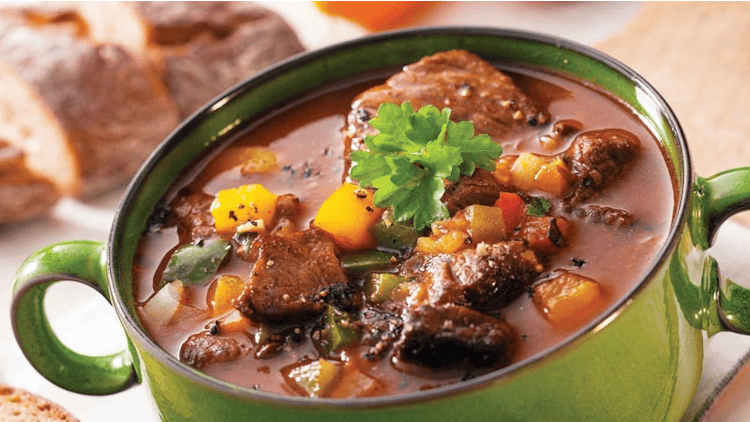
You might not guess it at first, but the #1 most nutrient-dense superfood was once easily found on farms and homesteads.
When individual little family farms were more common and society was more agrarian without the super-size industrial farming methods, people were closer to the land and their animals. You couldn’t simply go to the store and choose your favorite cut of meat for supper.
No, every part of the animal you had carefully raised needed to be fully utilized — you had to use or eat it all, including the parts you didn’t like so much. I’ve heard this described as “tongue to tail” or “head to hoof” eating. Nothing goes to waste.
That’s what my dad’s family did when he was growing up on the farm. Yes, and to hear him tell it, they ate very well. “Piles of mashed potatoes with chicken-liver gravy!...” So, um, was there real liver in the gravy?! “Yep. That’s what made it good… all those chunks of chicken liver floating in the gravy made it tasty.” Really? “And then there was beef liver and onions. But, you have to know how to prepare it to make it good. Overcooking the liver is the most common mistake.” Hmmm… OK.
Back then, did they really know that they were eating a superfood? Did they know that by eating all edible parts of the animal they were conferring more nutrition to themselves than if they had only chosen to eat the “tasty” cuts?
What Are Superfoods?
Depending on who you talk to, which blogs you read, and what promotional advertisements you see, you may be given several ideas of what defines a “superfood.” For some it could be an exotic fruit from the other side of the world, but for another it could be a common vegetable with uncommon amounts of a single nutrient. Even the term “nutrient-dense” can be confusing because it can have two meanings: 1) This food was grown in rich soil so it is nutrient-dense compared to the same food grown in poor soil, or 2) This food naturally has more vitamins and minerals per calorie than another completely different type of food.
For me, “superfoods” are those foods that provide an exceptional amount of micro-nutrients per serving and therefore don’t require that you eat a lot of them to get a big benefit.
And some of the most vitamin-packed, super-duper, nutrient-rich foods you can eat are readily available on the homestead. Yes, you can enjoy great nutritional benefits without traveling the world. And what’s the #1 super-duper homestead food? The answer is liver.
“Awe, c’mon,” you say? Maybe you’ve never tried liver. Maybe you were told that liver is good for you, so you ate it at your grandmother’s house just to be nice but didn’t really care for it. Whatever the case, it’s good nutrition packed with B-Vitamins. Like the famous quote from Hippocrates, “Let food be your medicine.”
Some years ago, I had a general feeling of malaise, fatigue, tiredness and (I’m sure no one noticed) a few grumpies now and then. I somewhat became accustomed to the feeling. When life became particularly stressful for me, I started having recurring nightmares after eating certain foods. I suspected I needed more B-vitamins so started taking lots of B-complex supplements. They made a small difference, but not enough to turn things around.
I remembered my great-aunt telling me that she had had similar problems and had benefitted from B-12 shots. Now, I try to stay away from the doctor’s office, but I figured this was worth a try.
I was given a shot that included the B-Complex vitamins as well as an extra amount of B12. I was amazed at the results. Within a half-hour I felt like the weight of the world had been lifted. I started to feel good again, and that night I had no nightmares. I was onto something big here!
In my opinion, a dietary solution is always preferable for deficiency problems, so I was thrilled to discover that liver could do as much as the B12 shots were doing — and more. Once I started eating liver regularly, things changed for the better. A lot better.
Anemia and Liver
I was never tested for anemia, but its symptoms include feeling fatigued, and being forgetful and grouchy. Because anemia is a condition where not enough red blood cells are circulating in the blood stream, it causes a lack of oxygen to the cells. This can be particularly serious when the brain becomes oxygen deprived — even death can result, if it’s not corrected.
There are different types of anemia: Iron Deficiency Anemia, Pernicious Anemia, B12 Deficiency Anemia, and Folic Acid Deficiency Anemia. What’s amazing about liver is that it contains high amounts of all of the nutrients needed to help with an anemic condition: Iron, B12, and Folic Acid. Studies have shown liver to be particularly helpful for pernicious anemia.1
B12 and Digestive Factors
Like me, my great-aunt had had digestive problems which may have made absorption of dietary B12 more difficult. The absorption of B12 in the small intestine is most efficient when “intrinsic factor” is produced by the stomach.
For those with low stomach acid or pernicious anemia, this “intrinsic factor” may not be there. But, it’s good to know that the body is still able to absorb about 1 percent of ingested B12 without it. Eating a food like liver, which is exceptionally high in B12, helps insure that you get the minimum required amount even if you’re only absorbing 1 percent of what you ate.
(The problem with having a lack of “intrinsic factor” in the stomach is why B12 shots or sublingual B12 can be more effective than ingested B12… these methods don’t go through the stomach for absorption.)
Older folks typically don’t produce as much stomach acid. Lack of stomach acid can adversely affect absorption of vitamins and minerals leading to many types of deficiencies. Because one of the symptoms of B12 deficiency is neurological problems, some older folks have been able to improve their memory by getting adequate B12.
Because dietary B12 occurs in significant amounts only in animal foods, vegans are at particular risk of B12 deficiency. Yes, Nutritional/Brewer’s Yeast does contain B12, but that’s because it has been fortified. The large flake Nutritional Yeast that Azure carries from Red Star (NS005) is specifically called “Vegetarian Support Formula (T6635+) Primary Grown Nutritional Yeast” and the source of B12 in this fortified formula is from a natural fermentation, not from a synthetic process or from an animal source. Fermented vegetables are also a source of B12, but unfortunately it is an inactive form that can interfere with absorption of the active form of B12.2
So, what’s a vegan to do for B12 on the homestead!? This is a serious concern and should not be taken lightly. Vegans must rely on commercial fortified foods and supplements to boost their levels of B12. For those who choose not to eat animal products, it's especially important to monitor your health and symptoms associated with nutritional deficiencies — especially B12. Even vegetarians who eat eggs and dairy (which contain some B12) may not have adequate amounts especially if malabsorption is a problem.
Although liver is a most-excellent source of vitamin B12, I found that it takes more than a few small morsels of liver to see a noticeable difference. In the first experiments on patients with pernicious anemia back in the 1920s, they had success eating half-pound of liver a day.1
And those all-important nutrients and B-vitamins (even the heat-sensitive ones like thiamin vitamin B1 and pyridoxine vitamin B6) need to be consumed in their most natural state, unheated, to provide the best benefit.3, 4
The Benefits of Freeze-Dried Liver
Now, not everyone is brave enough to eat raw liver (even though you’ll find recipes for it in “Nourishing Traditions” [BK117]5). But, thankfully, there is freeze-dried liver. And 100% pasture-raised beef liver powder in capsules is now available here at Azure from Vital Proteins (NS0105).
You may have heard of this kind of product being referred to as “liver pills” or “desiccated liver.” (Desiccated simply means “dried” or “dehydrated.”) The freeze-drying process uses no heat. The fat, connective tissues, and water are removed without destroying the heat-sensitive nutrients. Remember that vitamins B1 and B6 are sensitive to heat, so they are lost when liver is cooked. But, with freeze-dried liver those important vitamins are retained.
Liver that has not been heated seems to confer more benefits, perhaps because it still contains B6 which is necessary for producing stomach acid. Stomach acid in turn is needed to absorb the B12. (Low stomach acid can also be helped by Swedish Bitters [HS457], or supplementing with Betaine Hydrochloride with Pepsin until your stomach acid production is normalized.)
The idea of eating organ meats is certainly not new. Some traditional cultures only ate the organ meats and gave the muscle meats to the dogs.6 But all of the organ meats have their own nutritional benefits — nutrition not available in muscle meats. So, here at Azure we’re also happy to make available to you a freeze-dried multi-glandular powder (NS0107) from Traditional Foods Market, which includes 14 different organs and glands — not just liver. They’re all from beef or lamb and are free-range and pasture-fed.
Superior Nutrition is a Must
We are made out of what we eat and absorb. If we don’t eat the right things, or absorb the vital nutrition, we suffer. We suffer with physical, emotional and mental problems related to deficiencies and imbalances. And those around us suffer when our bodies and minds are not functioning as designed. Maybe it’s hard to think about eating strange parts of animals, but when you know that doing so could help you be calm, focused, energetic, and happy, it makes it all worth it.
If you’re new to the idea of incorporating animal foods into your diet, you can start small with baby-steps. Take advantage of the encapsulated beef liver. Start cooking your soups and rice in bone broth. Hide bits of liver or other meat in your casseroles if you have to, but find ways to start giving your body the nutrition it craves.
Eat what makes you well. Eat what gives you a better quality of life. Eat to live. When you feel better, you’ll feel like making the world a better place.
References
1 “Red-Blooded Doctors Cure Anemia,” by Nicole Jacovino , the Harvard University Gazette, September 22, 1998 http://news.harvard.edu/gazette/1998/01.22/Red-BloodedDoct.html
2 “Fermented Food & B12,” by Elizabeth Brown, July 7, 2015 www.livestrong.com/article/414082-fermented-food-b12/
3 “Nutrition Almanac,” Third Edition, by Lavon J. Dunne, copyright 1990 by John D. Kirschmann, p. 20
4“Nourishing Traditions,” by Sally Fallon Morrell, copyright 2001 New Trend Publishing, Vitamin B6 in raw liver, p. 232
5“Nourishing Traditions,” by Sally Fallon Morrell, copyright 2001 New Trend Publishing, Appetizers, p. 231, Recipes p. 612
6 “Liver: Nature’s Most Potent Superfood,” by Chris Kresser, April 11, 2008 http://chriskresser.com/natures-most-potent-superfood/
[whattobuybar]