Eddie Crippen has been involved in orchards since 1973, a job that he’s taken seriously since his college days. While attending Wayne State University in Detroit, Mich., studying pre-med/engineering, his father bought an orchard. It was a dream come true for him, Crippen said.
“I bought him a new Chevy crew cab pickup near Detroit and drove it home for the summer, and in July, I pitched a tent and started learning how to farm,” Crippen said.
From then on, Crippen began an intense learning process about every aspect of fruit trees, filled with hands-on experiences, lessons in horticulture and composting, and the science of organic farming.
In February 2007, Crippen was approached by David Stelzer and the family to plan, plant and teach them how to grow fruit trees at Azure Farms.
“This has been a great honor for me,” Crippen said. “I have now started my ninth year working for the Stelzers at Azure Farm and am hoping, Yahweh permitting, to be here the rest of my life. There are no words to describe what a wonderful place and people this is to work for.”
Along with his duties as orchard manager, Crippen is also the horticultural nutritionist. He determines harvesting maturity and storage timing and conditions. He also tries to keep up with the newest and best irrigation systems, techniques and orchard equipment.
He took the time to answer a few questions about the Azure orchards and the upcoming harvest season.
How many total acres of orchards does Azure own and where are they located?
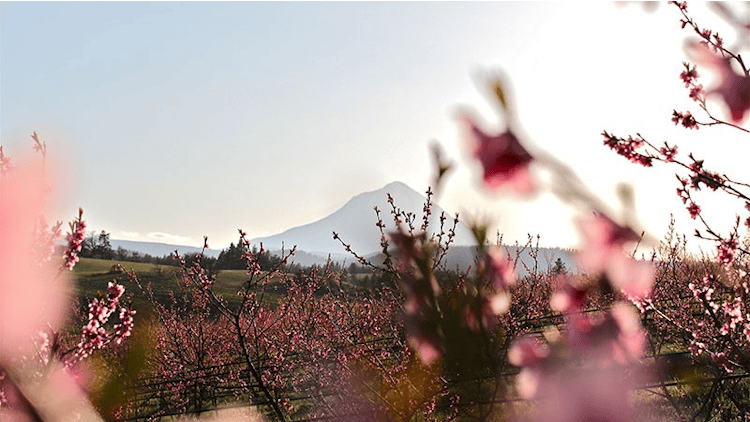
Our orchards are located in three areas. In Kimberly, the orchard is approximately 70 acres with about 55 acres planted. A small part is leased, which was originally owned by the founders. The Dufur orchard was planted in 2008, and there are 40 acres in fruit trees and grapes. We had some 10 acres of raspberries planted but have now changed that to vegetable row crops. Our newest planting is in the Parkdale area of the Hood River Valley, and there we have around 15 acres of blueberries and five-plus acres of raspberries. The entire southern view from this planting is Mount Hood, so it’s a sight to behold. Our total orchard acreage is about 115.
Azure has an extensive variety of delicious organic fruits — summer to fall. Which fruits are harvested between August and October?
We harvest a majority of our apple and pear crops in September and October. This year with the warm winter, our harvest is coming out three weeks early! Normally we would have picked cherries in Kimberly starting around the Fourth of July, but this year they started ripening around June 12. In Dufur, we picked the first variety, Chelan, on June 15. Normally Dufur picks three weeks later than Kimberly, and this year they are much closer together so far.
Our upcoming harvest for pears by variety will be green and red Bartlett and Asian (most likely Shinseiki) pears in August and green and red D’anjou, Bosc, Comice and Concorde, in that order, during September.
The apples will also start in August this year and ending in October in this order: Kimberly starts with Gravenstein, Early Blaze, Early Golden, Akane, Elstar, Gala, Jonagold, Yakima Beauty (a golden color and very smooth), Golden Delicious, Red Delicious, Empire, Cameo, Fuji, Pinata (very few of those), Ambrosia, Braeburn, Granny Smith, Melrose, Pink Lady, Golden Russet, Criterion and Winter Banana. In the future, we will harvest Honeycrisp apples in Kimberly as well.
Dufur apple varieties start harvesting more in September with a few other varieties as well, starting with Ginger Gold, Pacific Gala, Honeycrisp, Gibson Golden, September Wonder Fuji (harvests 3-4 weeks earlier than Fuji), Red Chief Delicious (much more flavor and 2 percent sweeter than Red Delicious), Jonagold, CandyCrisp, Mutsu, Granny Smith and Spitzenburg.
Most all the plum varieties will harvest in September. We have a larger selection in Dufur, but I’ll try and list the varieties in harvest order from both Kimberly and Dufur: Simka, Santa Rosa, Friar, Empress, Perfection, Gold Bar, Rival, Aprium, Pluot, Italian, President, Fortune and Sweetheart.
Peaches and nectarines in Kimberly follow in this order: Rich Lady (semi cling) harvesting this year on June 26 and normally the second week in July, Z Diamond nectarine, Fire Bright nectarine, Sunglo nectarine, Independence nectarine, Red Gold nectarine, Suncrest peach, Low Acid nectarine, Elegant Lady peach, Z Lady peach, Fantasia nectarine, Z Diamond Peach, Flame Crest peach, O’Henry peach and an old-fashioned Yellow Cling Stone peach variety.
Dufur peach and nectarines in order of harvest (usually starting in September but earlier this year): Bright Princess peach, Western Princess peach, Western Sweet nectarine, Elegant Lady peach, Red Gold nectarine, Grand Candy and Grand Sweet nectarines, Elberta peach and Hale peaches.
I want to mention cherry varieties because in a normal year, there would be some available in August, but this year, they’re much earlier. Kimberly has Bing, Rainier, Van, Lambert and Hardy Giant with Tieton and Skeena just planted last year. Meanwhile, Dufur has Chelan, Bing, Rainier, Regina, Skeena and Sweetheart.
Why did Azure choose these varieties of fruits for planting and harvesting?
Our goal when picking out the fruit varieties is a multistep process.
We start with taste. In 42 years, I have been able to taste just about every apple, pear and many other fruit varieties that are commonly available. The Stelzer Family adds their taste preferences, and then we consider costumer requests and preferences, friends’ ideas and the suggestions from the plant and tree growers and suppliers.
Our next consideration is quality and nutritional density. None of our selections are GMO or have any history of GMO hybridization. We obtain statements from all the nurseries of non-GMO production. Firmness and keep-ability are a big consideration, along with nutritional content. The firmness and storage life are directly related to the nutrition of the fruits, which in part is our responsibility as growers.
Most apple and pear varieties have quite similar nutritional content as do many of the blueberry varieties, but this changes somewhat with raspberries and strawberries. Since there are so many varieties to choose from, we based our selections on the highest nutrition and antioxidant content. For example, our strawberries are a variety called Seascape. They are a cool-weather plant and have the highest nutrition and antioxidant levels of all strawberries equaling nearly the same as blueberries.
The Caroline raspberries that we first planted were chosen for the same reason as the Seascape strawberries. Other raspberries we have planted this year are nearly the same in nutritional and antioxidant levels, and they are the old varieties that you might know, the ever-bearing fruits such as Meeker red raspberry and Munger (Black Cap) black raspberry.
What planning and care is required to ensure a robust harvest?
Even with picking out the highest nutritional properties of these varieties, the growing plays the biggest part in their goodness. We do extensive soil testing, leaf analysis and now we are using a Sap analysis test that actually gives us what one might call a “blood test” of the growing plant. From these we add our natural soil amendments and do almost weekly foliar feedings and injections of needed nutrients into the irrigation system. With the Sap sampling, we get the results back in four or five days and can address a nutritional problem before the plants goes into a stress situation, which affects growth, quality and the plant’s own immune system. This keeps the fruit growing consistently and the quality at its peak.
We are not organic growers; we are biological farmers in that we use organic as the minimum standard. Our goal is to produce the cleanest, most highly nutrient-dense food possible.
How do you check for the Azure Standard of quality and purity in the fruits? Are there specific things you and the workmen look for as a sign of some contamination or pest, resulting in maximum yield?
Since all the crops we grow ourselves are certified organic and they are planted remotely away from any conventional farming practices, we feel very confident that very little if any contamination has or will occur. We strive to improve our soils to the point of their natural state — the state at which Our Heavenly Father intended. Our soil amendments and foliar mineral and nutrients all meet and exceed organic standards.
We are not organic growers; we are biological farmers in that we use organic as the minimum standard. Our goal is to produce the cleanest, most highly nutrient-dense food possible. We are striving to meet the food standards given to us by God to which our company is named, the Azure Standard. We try to control insects and diseases threw our nutritional program and will use biological, bacterial, mineral and plant extracts in spot treatments when necessary. Observation is our major determination of problems and also we use the Sap test.
Is this year any different from previous years? Have fruits been affected positively or negatively this year by the weather?
Our harvest and production this year has been greatly hampered by the weather. Beginning last fall, with the early freeze at the end of October, we had to harvest seven bins of Granny Smith apples that were frozen in Kimberly. Our temperatures dropped from the 50s to as low as 5 degrees at the Dufur orchard. The cherries were affected the most, and in Kimberly the entire cherry crop was basically lost. The cherry trees in Dufur were more dormant so they weren’t as badly damaged. Some apple varieties, plums and peaches were slightly affected at both farms.
The warm winter in 2015 also had an interesting effect. Our season in Kimberly is about three weeks early. This is also true for most of the orchards in our area. California and Washington are having very similar conditions.
Dufur seems to be even a little bit earlier. Normally Dufur is two to three weeks later than Kimberly, but this year, it is starting out only a week later. This will be an interesting harvest season with trying to harvest both orchards at nearly the same time. You should expect to see our fruit available much sooner this year than in previous years!
How many workmen are there at the orchards? What are their duties, responsibilities throughout each season leading up to the harvest?
In Kimberly, we have a field crew of usually three people. During pruning season, we will add one or two more people if they are available. For thinning, we try to have four people and add more when possible. Cherry harvest is usually very fast, and we can have as many as eight. Apple, pear and plum harvest usually requires four or five people, but this year we will need more. We’ll have our largest crop of apples since we purchased the orchard!
In past years, David Stelzer’s son, Zechariah, and I operated the Kimberly orchard. I would drive there every Sunday or Monday and come back to Dufur on Friday night. Zechariah would come over frequently to help spray, mow and harvest. The first couple of years we were both there nearly every day — except weekends. This year we have hired Dan Pogue and his family to run the orchard. Zac (Zechariah) now only needs to go a couple of times a month to check on the Kimberly farm and the orchard. I have to spend quite a bit more time there than Zac to teach Dan all the ins and outs about the orchard. He has never farmed trees before.
Dufur has similar crew needs. There are five people usually available for the seasonal jobs and additional people can be borrowed from the greenhouses with others coming up from other orchards in the area when they’re available. At harvest, the Stelzer family gets involved and that gives us a tremendous crew increase!
The Dufur orchard is primarily farmed by David’s son, Zephaniah. Zac works with Zeph to get all the orchard needs done. This year, Ezekiel, Zac and Zeph’s younger brother, has been doing a lot of the spraying and mowing. And for a while, Zeph was absent from the orchards so he could build his house and get married. He’s getting back into service now.
The blueberry planting in Parkdale has taken a huge amount of time for both Zac and I from Kimberly and Dufur. We have been using some of the Dufur crew to help with the planting. And I am putting in an automated watering system so that we will be able to water the blueberries during the day and won’t have to drive the 70-mile, round-trip journey every day.
David’s sister, Alanda, and her daughter, Angela, are keeping an eye on this orchard and help us out tremendously. The planting is on their farm next to the house.