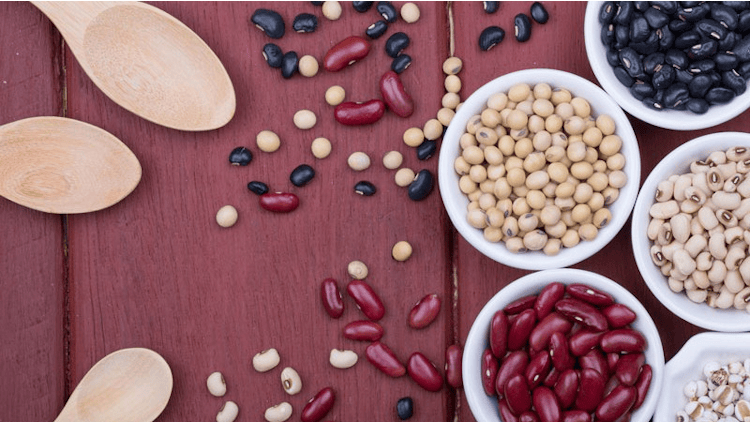
Beans — actually, I should say legumes since what I want to share with you is true for the greater bean and lentil family — come in an assortment of shapes, sizes and colors and offer a very large array of nutrients. I think we have all heard that beans are heart healthy and high in protein. Well guess what? It doesn't stop there!
Beans are heart healthy because they contain an abundance of soluble fiber that can lower cholesterol and triglyceride levels. Beyond the fiber, though, is the outstanding variety of phytonutrients (both antioxidant and anti-inflammatory). They also are very rich in vitamins and minerals such as copper, folate, iron, magnesium, manganese and omega-3 fatty acids.
In one cup of black beans, you get 15 g of fiber and 15 g of protein (nearly 1/3 of the daily value). This protein-fiber combination in legumes explains important aspects of their health benefits to the digestive tract, the blood sugar regulatory system, and in preventing cardiovascular disease.
Having a strong protein-fiber combination allows food to move along the digestive tract in a way that supports an optimal balance of microorganisms.
With a low glycemic index, beans contain a beautiful blend of complex carbohydrates and protein, which help keep blood sugars stable and may curtail fatigue and irritability. With a large abundance of fiber and antioxidants, beans are excellent at promoting health and reducing the risk for diseases.
Isn't it amazing that we are willing to spend a fortune on exotic superfoods when some of the world's healthiest foods are sitting right there under our noses — and fairly cheap on top of it thanks to the Azure Market bulk brand! Yes, beans are a superfood when you look at all that’s packed into these little legumes. It requires me to take a step back and reevaluate my mindset on them. I no longer am thinking of them as “poor man’s food” or feeling guilty for feeding them often to my family and guests. Instead I am thinking how grateful I am for such a powerful, nutrient-rich food that is so affordable and easy to serve at my table! I am resolved to incorporate them even more frequently into our diets.
It is recommended for adults to eat at least three cups of these legumes per week. That may sound a bit overwhelming at first, but if you think of how many different varieties of beans, lentils and chickpeas there actually are, and what an assortment of dishes you can incorporate them into, I believe we can do it!
Soaked or Sprouted Beans
As many of you are aware, soaking or sprouting beans is ideal for increasing digestibility. It is true that cultures that consume a lot of legumes take great care in properly preparing them. Beans are best soaked for long periods of time; the soaking water is poured off, then the beans rinsed really well.
"As the legumes cook, all the foam that rises to the top should be skimmed off,” writes Sally Fallon Morell in “Nourishing Traditions” (BK117). “Sometimes water is replaced midway through the cooking process. Such care in preparation ensures that the legumes will be thoroughly digestible, and all the nutrients they provide well assimilated because such careful preparation neutralizes phytic acid and enzyme inhibitors and breaks down difficult to digest complex sugars."
There are some who prefer to actually sprout the beans. Thus turning the beans into a vegetable and decreasing the total starch and carb content. By sprouting the beans, you are disrupting that special protein fiber ratio and changing some of the nutritional values. So each of us can decide which way is best to suit us. Either way is far better then just cooking a dry bean straight.
I'm very excited to share with you a wonderful timesaver I learned years ago. I am not a good one for planning my meals way ahead of time. There are many times when I have thought how nice it would be to include beans in one of the many dishes we like, but oh dear, I forgot to soak beans yesterday. This is where I love this idea of soaking/ sprouting big batches at once, and storing in quart bags in the freezer. Thus you have all the must-have benefits of soaking, the taste of freshly cooked, and the ease of quick to the table!
Of course, freezing the completely cooked beans is a must as well for using in enchiladas, chili etc. where freshly cooked flavor doesn't matter, and instant is even more convenient. Here are some simple steps to soak and sprout beans, store beans and cook beans so you can enjoy all their great health benefits as often as you like.
How to Soak Beans
♦ Place desired amount of beans in a large bowl, being careful to sort out any little dirt clods and rocks. Do not fill the bowl more than half full, as they will swell in size!
♦ Cover beans with lukewarm water (they absorb a lot so add more water as needed if they swell above the water).
♦ Add whey or lemon juice to the water. You will need approximately 1 TBS of lemon or whey per cup of dried beans. You can skip the lemon or whey in the soaking process, but it is recommended for neutralizing the phytic acid.
♦ Let them soak at room temperature 12 to 24 hours. Drain and rinse really well.
How to Sprout Beans
♦ Place desired amount of beans in a large bowl being careful to sort out any little dirt clods and rocks; cover with water. Let set overnight.
♦ Dump soaked beans into a colander and rinse really well with cold water. Be sure to rinse them well 2 to 3 times per day. Leave beans in the colander at room temperature for 2 to 4 days until little sprouts appear.
How to Store and Cook with Soaked or Sprouted Beans
When the beans are done soaking or sprouting (whichever method you prefer), you may cook them all up or bag the desired amount into quart or gallon freezer bags for future meals. Store bags in the freezer for up to three months. When ready to use, defrost the beans slightly before cooking with them.
♦ Place beans in a pot. Add water so the beans are covered by an inch. Bring to a boil, skimming off any foam as it arises.
♦ Turn to low; simmer one and a half to four hours (depending on bean variety) until beans are tender.
♦ The last half hour when beans are nearly tender is when you can add salt, garlic, and whatever seasoning you like. For my family, I add one tablespoon of salt per quart bag of beans, and that's it!
Now that you're ready to cook with heart healthy beans, I've put together a few recipes (including a Stelzer family favorite!) that use beans in delicious and unique ways. Soak, sprout, cook and eat healthy!