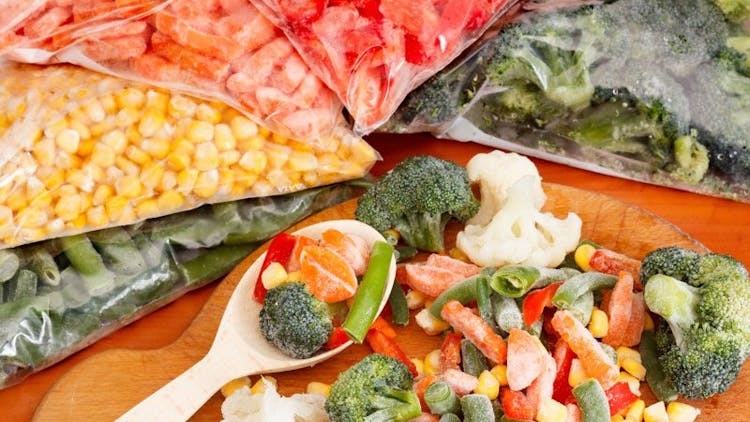
When gardening efforts are rewarded with an abundant harvest, freezing is a fast and easy way to enjoy the fruits of your labors well past their season. (Pun intended.) Freezing requires minimal prep time, no specialized equipment and has a low risk for food poisoning.
It's best to freeze fruits and vegetables quickly and at their peak ripeness, but avoid bruised or damaged ones.
They are best when they stay frozen at 0 degrees Fahrenheit or colder. Frozen fruit will keep for about a year and vegetables will keep for about 18 months. The length of time can vary depending on the type of freezer they are stored in and whether or not they are vacuum sealed.
A Note About Freezers
Most household refrigerators have frost-free freezers. They work by warming to 32 degrees Fahrenheit, or just above, one to four times per day – just long enough to allow any ice crystals that may have formed to melt and drain off. (Ergo the drip pan at the bottom of your unit.)
Over time, this can lead to freezer burn if there is too much air trapped in the freezer bag or container. Vacuum sealing can prevent freezer burn and extend the length of time frozen fruit and veggies can be stored in a frost-free freezer. Manual defrost chest freezers are best for the longest term storage without deterioration of food quality, especially in conjunction with vacuum sealing.
It's helpful to understand what happens to fruit and vegetables during the freezing process. As they freeze, the water they naturally contain expands. The resulting ice crystals break the cell walls. This cell damage is what makes frozen fruits and vegetables with high water content mushy when thawed. Rapid freezing and a maintained temperature of 0 degrees Fahrenheit can minimize this damage. The colder the temperature, the smaller the ice crystals, which do less damage than larger ones.
What to Know about Fruit
Nearly all fruits freeze well, especially berries. Peaches, nectarines, apricots and cherries, as well as core fruits are popular choices. But a quick note about cherries: It's usually best to eat frozen fruit before it is completely thawed. For this reason, pit cherries before freezing them, especially if they are destined for smoothies. Cherry pits do not enhance the frozen fruit eating experience in the slightest, and cutting pits out of frozen cherries is equally unpleasant.
Depending on the fruits you plan to freeze, you will need:
- colander (HA009)
- paring knife (not always necessary for berries) and/or corer (HA030)
- baking sheet (HA001, HA010)
- waxed paper or baking parchment (NF155, NF639) (NF669, NF571)
- freezer bags, vacuum sealer/bags, or freezer containers (NF370, NF285)
- optional – ascorbic acid (NS008) or lemon (QP058), sugar or sugar syrup (SW079), produce wash (NF225), paper towels (NF017, NF572, NF574), Heavy Duty Aluminum Foil (NF641, NF910), freezer tape
How to Freeze Fruit
What to Know about Vegetables
The vegetables best suited for freezing are those you would normally cook before eating. Unless you plan to cook them in a casserole or combination dish, vegetables that are usually eaten raw don't generally lend themselves to freezing (for example: onions, radishes and celery). Low-acid veggies work best. This may make freezing an easy and viable alternative to canning, since pressure canning is needed for low-acid foods.
Blanching and ice water shocking before freezing are strongly recommended. This process prevents damage to color, flavor and nutrients by halting the natural enzymatic breakdown of vitamin C and conversion of sugar to starch that occurs when vegetables are picked.
Some easy-to-freeze veggies include asparagus (QP187), green beans, broccoli (QP127), Brussels sprouts, carrots (QP165), cauliflower (QP129), kohlrabi, peas (in or out of pod), peppers (QP289), rhubarb (QP036), squash and sweet corn. Note: Some produce only available when in season. Check Azure's Produce page for availability.
You will need:
- colander (HA009)
- paring knife
- small to medium stock pot
- medium to large bowl (HA016, HA018)
- ice
- baking sheet (HA001, HA010)
- waxed paper (NF155, NF639) or baking parchment (NF669, NF571)
- freezer bags, vacuum sealer/bags, or freezer containers (NF370, NF285)
- clean kitchen or paper towels (NF017, NF572, NF574)
- optional – produce wash (NF225), Heavy Duty Aluminum Foil (NF641, NF910), freezer tape
How to Freeze Vegetables
[gallery columns="2" link="none" size="medium" ids="19014,18999,19013,18997"]
4. Clean vegetables thoroughly and cut, if necessary into desired pieces. (Preheat water to boiling during prep. Use 1 gallon per pound of finished product. Have ice water bowl ready.)
5. Blanch immediately:
[gallery link="none" size="medium" ids="19010,18995,19005"]
• Keep water at a consistent low – medium boil.
• Add veggies, but do not crowd them.
• Let boil for about a minute. Thicker vegetables, such as broccoli, may take longer. Test with a knife point. It should slide in and out easily.
• Quickly remove vegetables using a sieve or strainer and plunge into the ice water. This halts the cooking process. (If you have to do this several times in succession, have extra ice ready, as you will have to replenish it after each plunge.)
• Let vegetables chill completely before removing from the ice water and drain well. Removing them too soon will allow the still warm centers to continue to cook and turn your vegetables mushy.
6. Gently pat dry.
[gallery columns="2" size="medium" ids="19002,19008"]
7. Place evenly on parchment lined baking sheet and place in the freezer.
8. After the veggies are frozen, transfer into a freezer bag or vacuum seal; date, label, and return to the freezer as soon as possible.
More Fresh Produce Freezing Tips
The basic principle of freezing fruits and vegetables is to keep the moisture inside the packaging and the air outside.
Air exposure causes oxidation and results in changes in flavor and color. So pack food tightly and squeeze out as much air as possible. This is why vacuum sealing is a big advantage for long-term freezer storage. If you don't have a vacuum sealer, wrapping freezer bags in heavy duty foil and sealing with freezer tape can add storage time to your frozen produce.
Fruit is usually juicy and while it's tempting to just fill a freezer bag or container and stick the whole thing in the freezer, this has the disadvantage of allowing the produce in the center of the pack to continue to “juice” while the outside of the pack freezes. This tends to result in large frozen chunks that have to be broken apart later.
Freezing produce on a wax paper- or parchment paper-lined baking sheet allows each piece to freeze individually and at roughly the rate as the rest as long as the produce is spread out evenly. Small bits, such as kernels of corn, can be two or three kernels high in places, but the overall layer should be of even thickness. Whole fruit such as berries and fruit slices, such as peaches, can be placed very close together but should not be stacked or layered.
A few hours before adding your food to the freezer, turn down the temperature and if possible empty a shelf or make sure there will be plenty of air circulation around the baking sheet. It should be as level as possible. When the produce is frozen through, take it out, pick it up by the edges of the paper and dump it into a freezer bag or freezer container. Remember to label your freezer bags before filling.
How to Thaw Your Fresh Produce
Frozen vegetables usually go from the freezer into a steamer or pot of boiling water. However, sweet corn tastes best if it's partially thawed first. Fruits should be partially thawed at room temperature. If allowed to thaw completely before eating, they will turn mushy, so partially thawed is generally preferable.
Having a stash of frozen fruits and vegetables on hand not only saves time and money in the long run, but it’s a way to preserve extra fresh produce without the heat of canning. Frozen berries, sweet corn and peas also make a quick healthy snack on hot summer days or, for little ones, relief from teething discomfort.
Taking advantage of summer's bounty will pay off during winter's scarcity. And everyone wins in the end.