Have you ever eaten a refrigerated French fry? I hadn’t either until I learned about resistant starch and discovered, with my own mouth, how starches can change based on whether they are hot or cold. Of course, serious cooks, chefs and food technologists know how these things work.
But, by personally biting into a refrigerated French fry, I could completely understand that the difference was more than temperature. The starchiness of a refrigerated French fry is somehow denser and grainier than a hot or room-temperature French fry. And that difference is a big deal.
On the homesteads of yesteryear, there were no Nutrition Fact labels telling how many macro-nutrients your food contained. Folks ate what was nutritious and benefited their health.
Nowadays, most diets count calories, carbs, protein and fat as if those were the only things that mattered, often ignoring what modern science has revealed about the complexity of those things.
For example, there are multiple kinds of fats, proteins of all sorts (some natural, some denatured, but all varieties of amino acids), and many kinds of carbohydrates (simple sugars, starches and two kinds of fiber).
Is one kind of fat equally as good as another? Are all carbs equally nutritious? No. But, by eating what is naturally available to a homesteader (without the use of industrial processing), our diet will be closer to what we were designed to eat, leading to good health.
What is Resistant Starch?
When I first heard about resistant starch, I dismissed the idea. I guess I thought I knew all about sugars and carbs and their effect on body chemistry. But, alas, I couldn’t escape the truth in these sayings: “It’s what you learn after you know it all that counts” (John Wooden), “The more you know, the more you know you don’t know,” (Aristotle) and “Don’t believe everything you think” (from a bumper-snicker).
I was in for a pleasant surprise about a special kind of carbohydrate that resists digestion (thus the term “resistant starch”). I was amazed to learn that it can help those who are trying to lose weight (even those on low-carb diets) and those who are trying to regain their gut health.
Some might argue that what is not fully digested is “malabsorbed” and this unabsorbed nutrition might feed the gut bacteria instead of nourishing your body.
But the beauty of resistant starch is it actually does its best work when it’s not absorbed and it does feed the gut bacteria. That’s a good thing.
How a Low-Carb Diet is Beneficial
No doubt you’ve heard the virtues of eating a low-carb diet: your blood sugar remains low and steady, problems of insulin resistance are mitigated, you lose excess weight, certain diseases can be managed or controlled — even epilepsy seems to benefit from a ketogenic diet.1 People who suffer from diabetes, including Type 1, are discovering that a ketogenic diet helps considerably.2 (The ketogenic diet is high in quality fats and very low in carbohydrates.)
So, how then, do starches fit into the picture?
Serious low-carbers know that when counting carbs they can subtract the fiber from the total carbohydrate count on a Nutrition Facts panel because fiber is not broken down in digestion. Fiber doesn’t raise blood sugar, but instead simply travels through the intestines without being absorbed.
So, too, is resistant starch, but you won’t find it listed on a Nutrition Facts panel because the amount of resistant starch in a food is dependent on how it’s prepared and the temperature at which it’s served. (There are actually four different types of resistant starch,3 just as there are two kinds of fiber.) When the resistant starch is not absorbed, it feeds the bacteria in the large intestine and is essentially what’s called a “prebiotic.”
Resistant Starch is Prebiotic
Prebiotics help feed the bacteria in your gut. Not having enough beneficial bacteria in your gut can cause numerous problems. This is why probiotics (such as Arthur Andrew Medical’s Syntol [NS0062] and Dr. Ohhira’s Probiotics [NS688]) are so popular these days – they introduce probiotics into the system, and then prebiotics can feed them.
By including prebiotic foods in your diet, the beneficial bacteria survive and thrive. But that’s just the beginning of the story on resistant starch.
What is Butyrate?
When resistant starch reaches the large intestine, it feeds the bacteria there and the bacteria put off a byproduct called butyrate. Butyrate is an amazing fatty acid (also called butyric acid) that helps heal the gut lining. Your body can then absorb and use this wonderful fat. This enhances/reproduces the benefits of a ketogenic diet: You become a fat-burner rather than a sugar-burner.
That’s the concept behind the ketogenic diet. Your body actually prefers to burn fat for energy. However, when we eat too many sugars (and carbohydrates that are digested and absorbed as sugars, even so-called low-glycemic index ones), the body uses those carbs for fuel instead. By eating more fat, we actually train our bodies to burn fat. (The book by Bruce Fife, “The Coconut Ketogenic Diet,” does an excellent job of explaining this and it’s available here at Azure [BK372].)
Although butter is the richest food source of butyrate with 3 to 4 percent of butter being butyrate,4 the gut bacteria themselves create butyrate. They do this very efficiently and right where it’s needed to assist in preventing colorectal cancer. An informative video4 was produced in Australia to educate how butyrate improves gut health. I found it fascinating.
Studies on rats have even shown that butyric acid reduces inflammation in the gut and other tissues, some calling it “potently anti-inflammatory.”5 Other rat studies showed that butyrate improves tolerance to cold temperatures.5
Whether it’s due to the butyrate or simply healthier gut bacteria, many who have struggled with constipation (particularly those on low-carb or ketogenic diets) are noticing that chronic constipation is much improved by adding resistant starch to their diet.
How do you get more resistant starch in your daily diet? The short answer is to eat like a lazy homesteader who doesn’t want to build a fire to heat up the leftover potatoes. As for the long answer …
Green Bananas & Plantains
Green bananas are a significant food source of resistant starch. The riper they become, the more the starch has turned to sugar and, therefore, the less resistant starch it contains. Unripe plantains are also high in resistant starch. Here at Azure, we carry Pow! Flours brand of plantain flour [FL295].
Potatoes & Resistant Starch
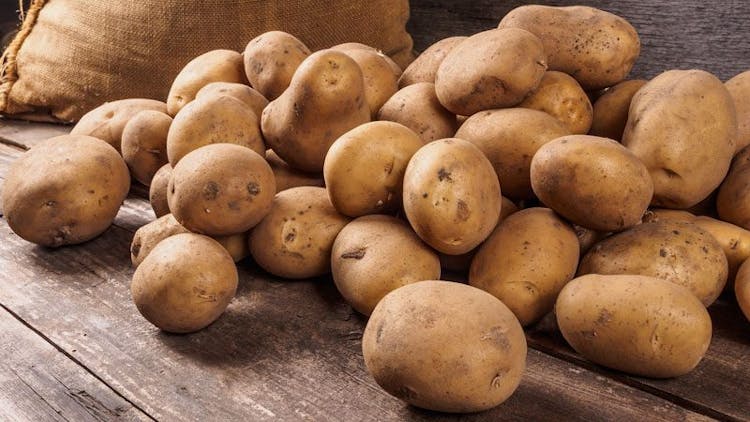
Raw potatoes have a considerable amount of resistant starch. Yes, raw potatoes are edible. But, generally speaking, chowing down on raw potatoes might not be very tasty, so an alternative is unmodified potato starch.
Yes, it’s a processed product that isolates the potato starch and retains the resistant starch of a raw potato (thus the importance of selecting unmodified potato starch). Stirring a tablespoon or two into a glass of water is easy and nearly tasteless. We carry Bob’s Red Mill Unmodified Potato Starch [BP274] in retail packaging. Or, if you prefer bulk packaging, we also offer it in a 5-pound size [BP272] through our own Azure Market brand.
However, the homesteader of yesteryear would not have had access to such a refined product. And as a general principle, whole foods are preferable because they contain complementary nutrients that may be needed, but not available in an isolated form.
A homesteader would likely get his resistant starch from cooked and cooled potatoes. The process of first cooking and then cooling a starch is called retrogradation. When cooked and still warm, the starches are not resistant to digestion and are then converted to sugar and absorbed into the body. These are the starches that can cause an increase in blood sugar and the resulting problems with insulin and weight gain. But, cool those starches down (retrograde them), and they become resistant to digestion, and thus beneficial.
Hmmmm; this means cold potato salad might be super-healthy for your gut (just be sure to use dressings or mayonnaise with only good fats.) And those cold French fries? Yep. If cooked in a healthy oil such as coconut oil or beef tallow, and then refrigerated for maximum resistant starch, they could offer you unexpected health benefits. (Typical fast-food French fries don’t qualify as healthy food for a long list of reasons. Sorry.)
And here’s a big question: Does this mean that potato chips (which are cooked and cooled) could actually be a healthy food? Well, I would say if they are cooked in healthy fats that don’t easily go rancid (such as beef tallow or coconut oil) they’d be acceptable.6 (As I’ve pointed out in previous articles,7 the healthiest fats are able to be acquired right on a homestead (no industrial processes or chemicals required). Thankfully, Jackson’s Honest has produced potato chips [SN1149] using healthy nutrient-dense coconut oil. Or, how about making your chips at home with beef tallow? [OL238]
Cold Beans & Gut Health
Ah, yes. Beans are also high in resistant starch, but it’s probably the raffinose and other difficult to digest elements of beans that give them their unique reputation. But, when prepared properly (including adequate soaking to reduce enzyme inhibitors), they can be an excellent source of nutrition. I’ve read about studies that seem to show that people who eat beans live longer than those who don’t. Considering the benefits of eating resistant starch, it might be true.
Beans are a favorite of homesteaders because they’re easy to grow and they keep well.
To get the most resistant starch out of beans, eat them cold. So far, one of my favorite beans for eating cold is Small White Navy Beans [BE092]. They are the same kind that baked beans are made out of, but when cooked plain without all the added sugars, they still taste great cold.
And, yes, pinto beans [BE086] are yummy cold (especially when eaten with all the fresh, cold goodness of a taco salad).
Popcorn, Rice & Barley
Looking for a crunchy snack with resistant starch? Popcorn does contain retrograded starch (cooked and cooled), so it could be one of the easiest healthy snacks from which to get resistant starch.8 By adding organic butter or coconut oil and other healthful seasonings (such as natural salt [BP282], nutritional yeast [CO373], dill weed [HS061], etc.), you can create a healthful alternative to the chemical-laden commercial popcorn products.
Rice is another excellent source of resistant starch but must be eaten cold to achieve the resistant starch benefits. Barley, which can often be used as a nutritious alternative to rice, also contains resistant starch when cooked and cooled.
Contradictions & Conclusions
Truth be known, in my study of resistant starch, I found lots of conflicting information.
There seems to be disagreement on whether raw or retrograded resistant starch is better or whether isolated resistant starch is harmful or just not as helpful as whole-food resistant starch. There’s also disagreement on the methods of increasing resistant starch in your foods (should you reheat and cool multiple times, refrigerate for hours, or just make sure it doesn’t exceed 130 degrees if reheated?) Does resistant starch cause problems for those with SIBO (small intestinal bacterial overgrowth), or does its gut-healing benefits actually help SIBO?
I don’t have those answers, but I understand that as more people try this for themselves and share with others their experiences and successes, together we’ll find the answers.
Here at Azure, we have a wide variety of beans, potatoes and rice, plus specific resistant starch products such as unmodified potato starch and plantain flour to choose from. Buy it with the rest of your Azure order. Eating well shouldn’t be difficult or expensive.
REFERENCES
[1] Epilepsy Foundation: Ketogenic Diet http://www.epilepsy.com/learn/treating-seizures-and-epilepsy/dietary-therapies/ketogenic-diet
[2] The Ketogenic Diet and Type 1 Diabetes: What I Eat http://livingvertical.org/2015/09/01/the-ketogenic-diet-and-type-1-diabetes-what-i-eat/
[3] How Resistant Starch Will Help to Make You Healthier and Thinner http://chriskresser.com/how-resistant-starch-will-help-to-make-you-healthier-and-thinner/
[4] Video: Hungry Microbiome: Why Resistant Starch is Good for You. https://www.youtube.com/watch?feature=player_embedded&v=NI3KtR3LoqM with more information at http://csiro.au/hungrymicrobiome/
[5] Butyric Acid: an Ancient Controller of Metabolism, Inflammation and Stress Resistance? http://wholehealthsource.blogspot.com/2009/12/butyric-acid-ancient-controller-of.html
[6] At Jackson’s Honest Chips, Coconut Oil is the Key /azure-life/blog/coconut-oil-potato-chips-jacksons/mpnoAgHHwfqXYH9Z/
[7] Grass-fed Animals Result in Good Fats and Quality Protein /azure-life/blog/grass-fed-animals-meat-fats/s0OquKfLF3E183Db/
[8] Vegetable Pharm: Popcorn RS http://vegetablepharm.blogspot.com/2015/10/popcorn-rs.html
[whattobuybar]