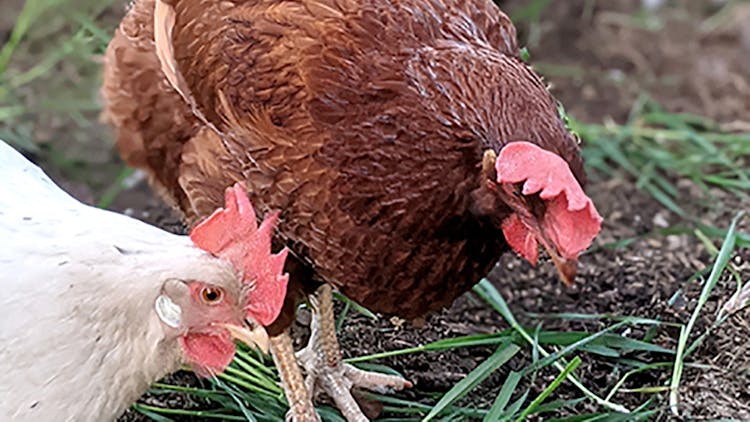
Urban chicken farming isn’t a new concept, however, with the events of the last year, many have discovered the freedom of being self-sufficient and have turned to living as sustainably as possible.
About five years ago our family decided to pick up a half dozen baby chicks from a friend who raises chickens, and start our own flock of layer hens. Our home is on about a quarter acre lot in town, but you don’t have to live on a forty-acre farm to raise a flock of your own.
For our family, the impact of the last year’s predicament was minimal, partly because of where we live, but mostly because of the sustainable lifestyle that we’ve created with minimal reliance on outside sources. With a little planning, it’s possible to create sustainable living practices, breaking our reliance on a food supply that can be unreliable in times of uncertainty. We buy the majority of our pantry items from Azure and grow as much of our own food as possible, including raising layer hens in our backyard.
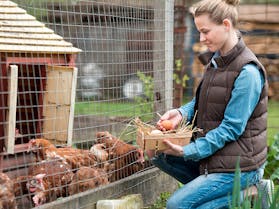
One of the perks to raising our own hens is knowing exactly where our food comes from, because the eggs we eat are only as good as the feed our hens eat. We feed our hens 100% organic feed and provide them access to a pesticide free outdoor environment, which is extremely important to our family. A lesson I’ve learned as an urban chicken farmer (and I use the word farmer loosely) is that hens are creatures of habit. If you start them with a certain feed, that is the feed they’ll want. We started our hens with Scratch & Peck brand feeds, and I’m pretty sure they’d rather “starve” than eat any other type of feed. Okay, that may be a bit of an exaggeration… they’ll eat other feeds, but not without protest.
Raising your own hens not only gives you the freedom to control your own food supply, but also provides a source of entertainment and stress relief. If you’ve ever wondered where the phrases “pecking order,” “hen pecked,” “coming home to roost,” or “chicken-hearted” come from, just take a seat outside and watch a flock of chickens for a while. I promise… you will be amused. After a stressful day, I’ve found great mental healing and relaxation collecting eggs, cleaning out the coop and watching the hens go crazy over a bug.
As you consider the changes you’ve made over the last year, how many of those changes have been in forming new habits of sustainable living practices for your family? If you’re looking for ways to continue to build a more sustainable way of living, I encourage you to give backyard chicken farming a try. Chickens are one of the easiest livestock to raise (take it from this rookie) and worth the investment.
Not sure how to get started, here are a few tips from my experience:
Prepare for your chicks
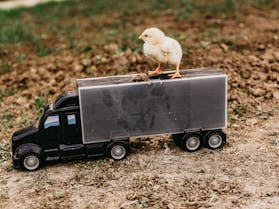
You’ll want to have a brooder to start your chicks in. We keep our chicks in the garage or laundry room and use an extra-large dog kennel with a heat lamp attached to it. Along with the brooder and heat lamp, you’ll want to have a waterer and feeder, bedding (pine shavings or straw) and chick starter feed (such as Modesto Milling Organic Chick Starter & Poultry Grower Crumbles or Scratch & Peck Organic Naturally Free Poultry Starter Feed, Soy and Corn Free).
We started with six chicks. When choosing chicks, research those that are suited for your climate. For our area, in Dufur Oregon, we picked breeds that were able to weather colder winter temperatures. I love having a variety of hens, so our flock consists of Rhode Island Reds, Delawares, Golden Laced Wyandottes and Bantams. Not only do these hens do well in colder winter temperatures, but they’re great starter hens for the beginner backyard chicken farmer. Now that we’re a few years in, we’ve built our flock to sixteen, which is the most our yard can comfortably support.
Moving your hens outside
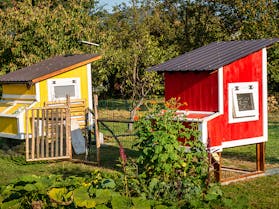
When it’s time to move your chickens out of the brooder and into the yard, you’ll want to have a coop ready. We built our coop from 2x4’s, plywood and chicken wire using instructions we found online. Whether you choose to build a coop or buy one, you’ll want to make sure it has enough room for your hens and provides a safe, well ventilated, easy to access space for your flock. When considering the placement for your coop, you’ll want to make sure that it’s in location where the coop can stay dry and is protected from the sun (it’s easier for hens to stay warm in the cold than to keep cool in the heat). If you’re keeping your hens in the coop, provide about four-square feet per bird. If your hens are going to free-range and only use to coop for sleeping and egg-laying, they’ll do fine with less than four-square feet per bird. Since chickens are prone to different types of mites and lice, I sprinkle diatomaceous earth in the coop and the dirt around the coop to help prevent mites and lice.
As your hens grow, which will happen quickly, their nutritional needs change. You have the option of purchasing pre-mixed feeds (I use Scratch & Peck Organic Naturally Free Poultry Layer Feed, 16% Soy and Corn Free) or you can truly go full DIY and mix your own feed. Azure has so many wonderful organic pre-mixed chicken feed options, as well as lots of grains for mixing your own feed blend.
Living a sustainable lifestyle
Raising layer hens is one of many ways our family has chosen to take care of our needs. We continue to learn ways to live sustainably and enjoy the freedoms that come from controlling your own food supply, whether it’s through food storage, learning to mill our own grains or raising our own layer hens. You can start or continue your journey to living a sustainable life too, and at Azure, we’re here to support you along the way.